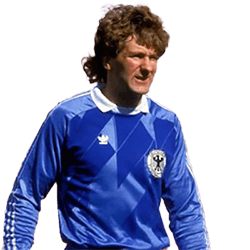
I don't want to lie anymore
Former BVB star makes cocaine confession

Former BVB professional and national goalkeeper Eike Immel avoids prison, partly because he has admitted to his long-standing cocaine addiction.
In the appeal proceedings for fraud before the Marburg Regional Court, as reported by Bild, the 65-year-old laid his cards on the table. Burkhard Benecken, the attorney for the former footballer, stated that while it is uncomfortable for Immel, he wants to be open about it: there was a cocaine problem with Immel.
Immel had repeatedly borrowed money from acquaintances over years and failed to repay it. He used the funds "exclusively" to finance his cocaine consumption, Benecken emphasized.
The attorney also explained regarding Immel's offense that his client wants to downplay or minimize nothing. He stands by the fact that he defrauded the victims and was aware that he could not repay the determined amounts even remotely. The matter weighs heavily on Immel.
The first verdict of two years and two months in prison and the threatened prison sentence were described by the attorney as a "salutary shock" for Immel. Immel made serious mistakes, shows insight, and demonstrates remorse.
The former BVB professional is not a fraudster who exploits everyone to the fullest to drive a Ferrari himself, the attorney explained. The principle of rehabilitation hovers over everything. Once his cocaine addiction is treated, Immel will not commit any more crimes, the attorney expressed confidence.
Ex-BVB professional Eike Immel refuses to lie anymore
Immel, who is said to have first come into contact with cocaine in 2007, emphasized that he can only repeat how terribly sorry he is. In essence, he can be grateful that he was reported. He admits to everything. He does not want to lie anymore. He hopes he gets a second chance.
With this argumentation, his attorney and Immel convinced the court.
He was sentenced to a suspended sentence of two years, must participate in outpatient drug therapy, submit to regular testing, and complete 200 hours of community service.
The prosecution can, however, still appeal the decision.